Rio Negro (Amazon)
Largest blackwater river and major Amazon tributary.

JOPLFM · CC BY-SA 4.0
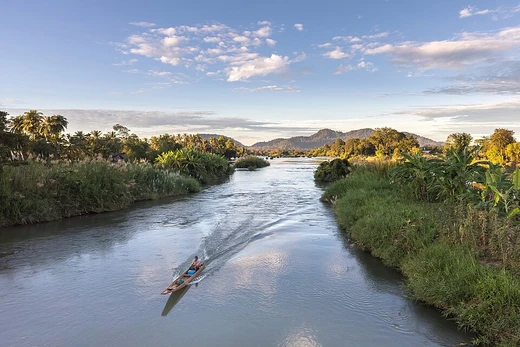
The Rio Negro, also known as the Guainía in its upper course, is the largest left tributary of the Amazon River and the largest blackwater river in the world. It accounts for about 14% of the water in the Amazon basin and is one of the world's ten largest rivers by average discharge. Originating in the tepuis of the department of Guainía, Colombia, it flows southeastward into Brazil, where it meets the Solimões River to form the Amazon River, creating the phenomenon known as the Meeting of Waters.
- sediment_load
- Negligible; often cited as less than 1 million tonnes per year
- named_by
- Portuguese explorers, likely in the 17th century
Lore & Background
The river was named by Portuguese explorers, likely in the 17th century, not by Francisco de Orellana. By the middle of the 17th century, Jesuits had settled along its banks among the Manau, Aruák, and Tarumá Indians. In 1800 German scientist Alexander von Humboldt and French botanist Aimé Bonpland explored the river. Rice of Harvard University traveled up the Orinoco, traversed the Casiquiare canal, and descended the Rio Negro to the Amazon at Manaus, using aerial photography and shortwave radio for mapping.
Reader's Guide
The Rio Negro is significant as the largest blackwater river in the world, contributing roughly 14% of the water in the Amazon basin. Its dark color, resembling strong tea, comes from humic acid due to incomplete breakdown of vegetation. Despite its high flow, it carries a low sediment load. The river supports a large fishing industry and has numerous turtle beaches, challenging older ideas that blackwater rivers are unproductive. The Casiquiare canal uniquely links the Rio Negro with the Orinoco basin, allowing some aquatic species to pass between the two systems. The river's history includes early exploration by Francisco de Orellana, Jesuit settlements, and later scientific expeditions by Humboldt, Bonpland, Spruce, Wallace, and Rice. The Anavilhanas National Park protects part of the river archipelago.
Did You Know?
- The Rio Negro accounts for about 14% of the water in the Amazon basin.
- Its dark color comes from humic acid due to incomplete breakdown of phenol-containing vegetation.
- The river is linked to the Orinoco basin via the Casiquiare canal.
A Three-Nation Waterway
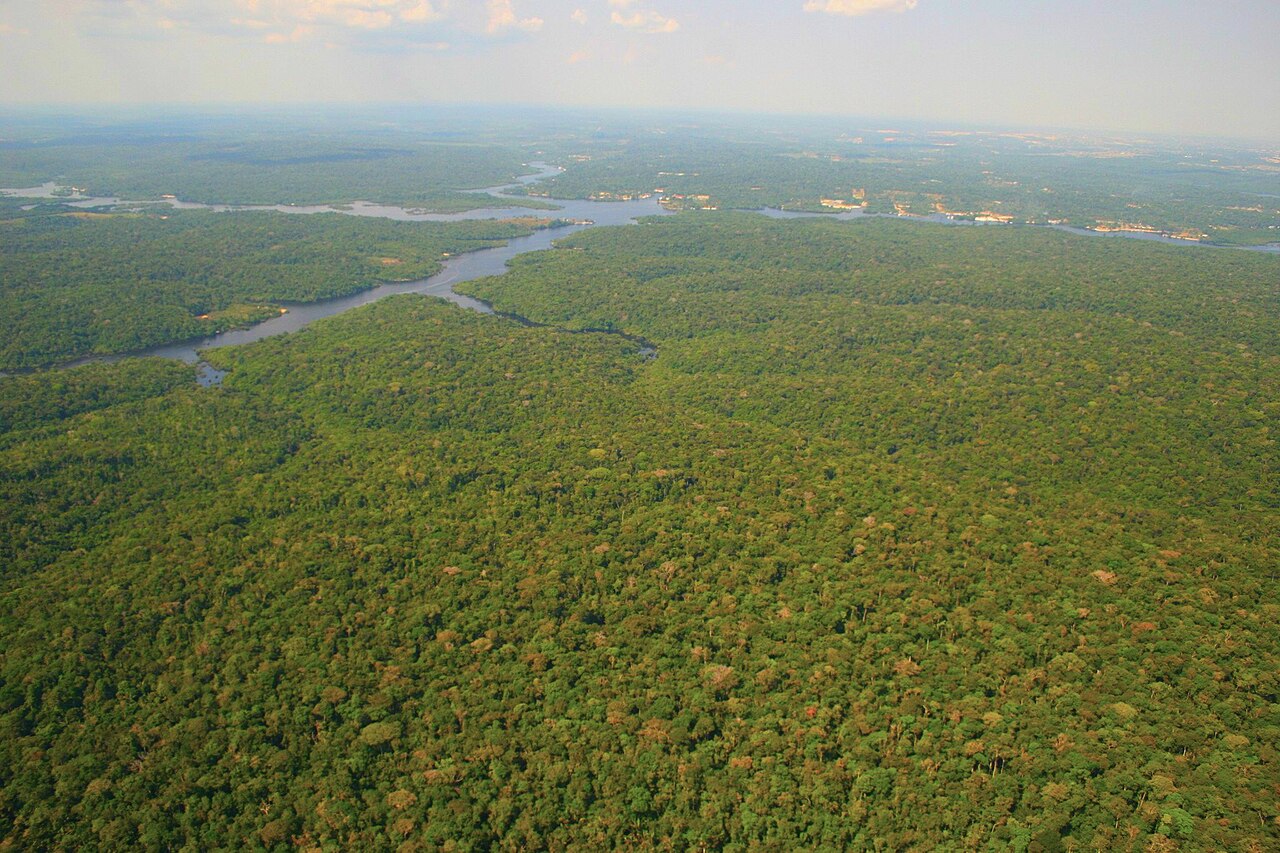
The Rio Negro is born in the tepuis of Colombia's Guainía department, where it still carries the name Guainía. Its young upper course threads east-northeast through the Puinawai National Reserve, brushing past small indigenous settlements—Cuarinuma, Brujas, Santa Rosa, Tabaquén. After roughly four hundred kilometres it becomes the border between Colombia and Venezuela's Amazonas State, passing Tonina and Macanal before swinging southwest to the Venezuelan town of Maroa. Downstream, tributaries from both banks feed the river, and it grows large enough to spawn the broad river islands typical of the basin. At the Piedra del Cocuy, a Precambrian igneous outcrop of the Guyana Shield, the tripoint of Colombia, Venezuela, and Brazil sits in the middle of the current, and the river enters Brazil's Amazonas State. It gathers the Içana and the Uaupes, its largest tributary, then turns east past São Gabriel da Cachoeira and the Adormecida mountain range. In the lower course the river broadens; during the wet season it can flood up to thirty kilometres wide, becoming a chain of lagoons and channels. Near Carvoeiro the Branco River joins, and the Anavilhanas archipelago, protected by a 350,018-hectare national park created in 1981, marks the final stretch before the Rio Negro meets the Solimões to form the Amazon.
The Casiquiare Link
One of the Rio Negro's most remarkable features is the Casiquiare canal, which enters from the north roughly 120 kilometres downstream from the Venezuelan town of Maroa. This natural waterway creates a unique hydrological bridge between two of South America's great river systems: the Orinoco and the Amazon. Because of this connection, many aquatic species are found in both the Rio Negro and the Orinoco, blurring the boundary between what are normally separate basins. The canal's ecological significance was made vividly clear during the 1924–25 expedition of Alexander H. Rice of Harvard University, who traveled up the Orinoco, crossed the Casiquiare, and then descended the Rio Negro all the way to Manaus. Rice's journey was the first to employ aerial photography and shortwave radio for mapping the region, a technological milestone that opened the remote interior to scientific study in a new way. The Casiquiare thus stands as both a geological curiosity and a living corridor of shared biodiversity.
Blackwater Ecology and the Hunger-River Myth
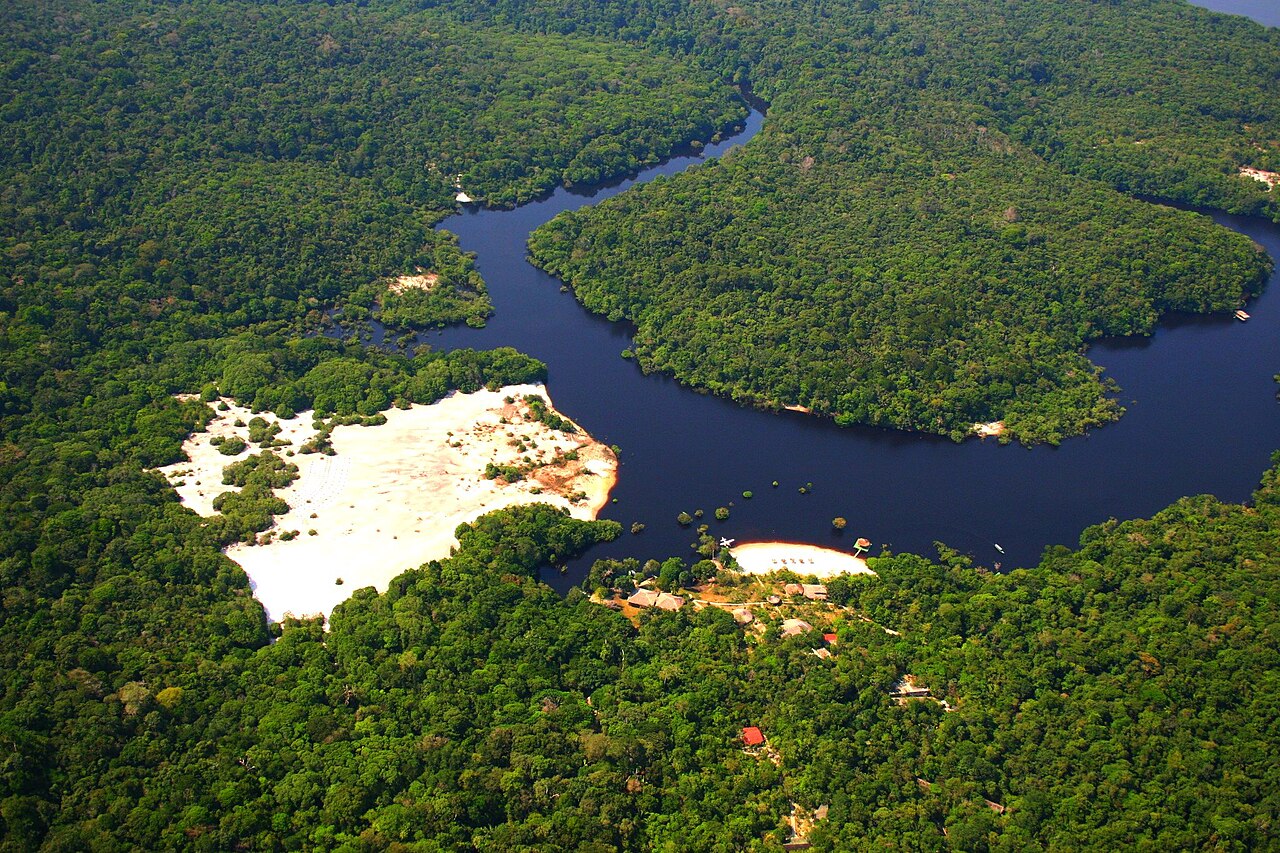
Despite its name, the Rio Negro's water is not truly black but resembles strong tea, a colour produced by humic acid released from the incomplete breakdown of phenol-rich vegetation in sandy clearings along its banks. From a distance, however, the river does appear black, which is how it earned its name. The Rio Negro is the world's largest blackwater river and carries a remarkably low sediment load—averaging just 5.76 million tonnes per year at Manaus. For decades, scientists labelled blackwater rivers as hunger rivers, supposedly too nutrient-poor to support much life. That view is now being overturned. The Rio Negro sustains a large fishing industry and hosts numerous turtle beaches. Its species richness is extraordinary: roughly 700 fish species have been documented in the basin, with estimates of 800 to 900 in total, including nearly 100 endemics and several species not yet described. Many of these, such as the cardinal tetra, are prized in the global aquarium trade. The Casiquiare canal further enriches this diversity by allowing species to move between the Rio Negro and the Orinoco.
Five Centuries of Exploration
The Spanish explorer Francisco de Orellana first encountered the river in 1541 and gave it the name that endures today. By the mid-seventeenth century, Jesuit missionaries had established settlements along its banks among the Manau, Aruák, and Tarumá peoples. The following centuries brought devastation: after 1700, the slave trade along the river was common, and indigenous populations were further decimated by Eurasian diseases. In 1800, the German naturalist Alexander von Humboldt and the French botanist Aimé Bonpland explored the waterway, and between 1852 and 1854, Richard Spruce and Alfred Russel Wallace made extensive botanical collections and observations along its course. The 1924–25 Harvard expedition of Alexander H. Rice marked a technological turning point, being the first to use aerial photography and shortwave radio to map the region. In 1968, an SRN6 hovercraft navigated the Rio Negro during a National Geographic expedition, and the area later served as the filming location for the 2003 television series Survivor: The Amazon. Each era of exploration has peeled back another layer of this vast, complex waterway.
Gallery
Frequently Asked Questions
Who is Rio Negro (Amazon)?
The Rio Negro is the largest left-bank tributary of the Amazon River and holds the distinction of being the world's largest blackwater river. It originates in the tepuis of Colombia's Guainía department and flows southeastward into Brazil.
What are Rio Negro (Amazon)'s powers/role?
As a blackwater river it carries a negligible sediment load—often cited at under one million tonnes per year—giving the water a dark, tea-like hue from dissolved tannins. It contributes roughly 14% of the total water volume in the Amazon basin and ranks among the ten largest rivers on Earth by average discharge.
How does Rio Negro (Amazon)'s story end?
The river's journey concludes where it converges with the Solimões River in Brazil, the two together forming the main stem of the Amazon. This confluence produces the famous Meeting of Waters, in which the dark Rio Negro and the muddy Solimões flow side by side for kilometres without immediately blending.
Why is Rio Negro (Amazon) important?
It is the single largest tributary feeding the Amazon and the biggest blackwater river on the planet, making it central to the basin's hydrology and ecology. Its dark, nutrient-poor waters sustain aquatic ecosystems that differ markedly from those of the sediment-rich white- and clearwater rivers.
What is the Rio Negro (Amazon) named after, and who named it?
The name 'Rio Negro' (Black River) was assigned by Portuguese explorers, most likely in the 17th century, in reference to the water's deep, tannin-stained colour. In its upper course before crossing into Brazil, the same waterway is called the Guainía.
More in Rivers 1-16
Spotted an error? Know more?
This is a living reference — every entry is fact-audited, and reader corrections feed straight into our audit queue. Suggest an edit · See this site's audit record