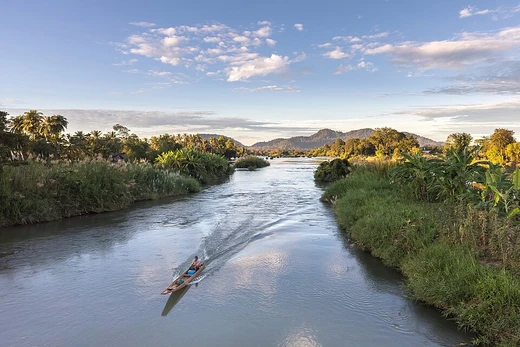
Tigris
Eastern great river of Mesopotamia, flowing through history.

Hamza Al Mosuly · CC BY-SA 4.0
The Tigris is the eastern of the two great rivers that define Mesopotamia, the other being the Euphrates. It flows south from the mountains of the Armenian Highlands through the Syrian and Arabian Deserts, merging with the Euphrates and reaching the Persian Gulf. The river has nurtured ancient civilizations, including the Assyrian Empire, and passes through historical cities such as Mosul, Tikrit, Samarra, and Baghdad.
- source
- Taurus Mountains of eastern Turkey
- mouth
- Shatt al-Arab near al-Qurnah
- countries
- Turkey, Syria, Iraq
- major_cities
- Mosul, Tikrit, Samarra, Baghdad
- ancient_cities
- Nineveh, Ctesiphon, Seleucia
Lore & Background
The Tigris rises in the Taurus Mountains of eastern Turkey, about 25 km southeast of Elazığ and about 30 km south of the Euphrates valley. It flows 400 km through southeastern Turkey before forming part of the Syria-Turkey border for 44 km, the only part of the river in Syria. Its affluences include Garzan, Anbarçayi, Batman, and the Great and Little Zab. Near its confluence with the Euphrates, the Tigris splits into several channels, including the artificial Shatt al-Hayy, which joins the Euphrates near Nasiriyah, and distributaries that feed the Central Marshes and Hawizeh Marshes. The main channel continues south, joined by the Al-Kassarah, and finally merges with the Euphrates near al-Qurnah to form the Shatt al-Arab.
Reader's Guide
The Tigris has been a vital water source for Mesopotamia since ancient times, irrigating Sumerian civilization and supporting cities such as Nineveh, Ctesiphon, and Seleucia. It is home to archaeological sites and ancient religious communities, including the Mandaeans, who use it for baptism. In ancient times, the river nurtured the Assyrian Empire, with remnants such as the relief of King Tiglath-Pileser. Today, the Tigris faces modern threats from geopolitical instability, dam projects, poor water management, and climate change, raising concerns about its sustainability. Efforts to protect and preserve the river's legacy are ongoing, with local archaeologists and activists working to safeguard its future. The river is heavily dammed in Iraq and Turkey for irrigation and flood control; Mosul Dam is the largest dam in Iraq. Recent Turkish damming has been controversial for environmental effects and potential reduction of downstream flow. Water from the river is used as a means of pressure during conflicts.
Did You Know?
- In Sumerian mythology, the Tigris was created by the god Enki, who filled the river with flowing water.
- The Tigris appears twice in the Old Testament: in the Book of Genesis as the third river from the Garden of Eden, and in the Book of Daniel.
- The name 'Tigris' derives from Old Persian 𐎫𐎡𐎥𐎼𐎠 (Tigrā), from Akkadian 𒀀𒇉𒈦𒄘𒃼 (Idiglat), from Sumerian 𒀀𒇉𒈦𒄘𒃼 (Idigna), meaning 'the swift river'.
The River's Physical Journey
The Tigris stretches roughly 1,750 kilometres from its source in the Taurus Mountains of eastern Turkey, about 25 kilometres southeast of Elazığ, all the way to the Persian Gulf. After threading 400 kilometres through southeastern Turkey, it briefly serves as the Syria-Turkey border for a 44-kilometre stretch—the sole segment of its course lying within Syrian territory. Tributaries such as the Garzan, Anbarçayi, Batman, and the Great and Little Zab swell its waters before it enters Iraq, where it passes through the historic cities of Mosul, Tikrit, Samarra, and Baghdad. Near its confluence with the Euphrates, the river fragments into multiple distributary channels: the Shatt al-Hayy heads toward Nasiriyah, while the Shatt al-Muminah and Majar al-Kabir feed the Central Marshes, and the Al-Musharrah and Al-Kahla nourish the Hawizeh Marshes. The main stem, reinforced by the Al-Kassarah, ultimately merges with the Euphrates at al-Qurnah to create the Shatt al-Arab, whose banks are home to the port city of Basra. In antiquity, cities like Nineveh, Ctesiphon, and Seleucia thrived on its waters, and the Sumerian settlement of Lagash was irrigated by a canal cut around 2900 B.C.
A Name Carried Across Millennia
The name we use today traces a remarkable linguistic journey. The Sumerians called the river Idigna, a term scholars interpret as 'the swift river,' a deliberate contrast to the Euphrates, whose slower current deposited more silt and built a higher bed. That Sumerian root was absorbed into Akkadian as Idiglat, then passed into Old Persian as Tigrā, and from there into Ancient Greek as Tígris or Tígrēs—likely echoing a proto-form meaning 'running water.' The Greek rendering eventually reached Latin as Tigris, the form most Western readers encounter. Meanwhile, the Akkadian version radiated outward through the Semitic language family: Hebrew rendered it as Ḥîddéqel, Classical Syriac as Deqlāṯ, Jewish Babylonian Aramaic as diqlāṯ or diglāṯ, and Arabic as Dijlah. In the Kurdish languages spoken across the upper basin, the river carries the evocative title Ava Mezin, simply 'the Great Water.' Each name preserves a different facet of how the peoples who lived beside the river understood its character—its speed, its abundance, its sheer scale.
Sacred Waters Across Faiths
Few rivers have been woven into so many religious traditions. In Sumerian mythology, the god Enki is credited with creating the Tigris and filling it with flowing water. Hittite and Hurrian mythologized it as Aranzah, a deified son of Kumarbi who, alongside his brothers Teshub and Tašmišu, was spat from Kumarbi's mouth onto Mount Kanzuras; later he conspired with Anu and Teshub to bring about Kumarbi's downfall in the Kumarbi Cycle. The Old Testament names the Tigris twice: in Genesis as the third of four rivers flowing from the Garden of Eden, and in Daniel, where the prophet receives a vision beside 'that great river.' Islamic tradition references it in Sunan Abi Daud, and the river's flow in Baghdad is said to limit access to the tombs of Imam Ahmad Bin Hanbal and Syed Abdul Razzaq Jilani. The Mandaeans, an ancient religious community, continue to use the Tigris for baptism. Perhaps most poignantly, Bahá'u'lláh composed The Hidden Words around 1858 while strolling along the river's banks during his exile in Baghdad.
Dams, Diplomacy, and a Fragile Future
The Tigris has long served as a vital transport artery through an otherwise arid landscape, with shallow-draft vessels reaching as far as Baghdad and rafts historically carrying cargo downstream from Mosul. Yet the river's modern story is dominated by water management. Both Iraq and Turkey have built extensive dam systems to irrigate the semi-desert regions flanking the valley and to mitigate the severe spring floods that historically followed the April snowmelt in the Turkish mountains. Mosul Dam, Iraq's largest, became a source of acute alarm in February 2016 when the U.S. Embassy and Iraqi Prime Minister Haider al-Abadi warned of potential collapse, putting between 500,000 and 1.5 million people in the floodplain at risk of drowning, with Mosul, Tikrit, Samarra, and Baghdad all threatened. Turkish damming has also sparked controversy over reduced downstream flows and environmental damage. In 2014, the 'Geneva Consensus on Tigris River' marked a breakthrough, with Iraqi and Turkish stakeholders agreeing through the Strategic Foresight Group on a shared plan for data exchange and flow-calibration standards. Today, geopolitical instability, climate change, and poor water governance continue to press on the river's sustainability, while local archaeologists and activists work to preserve its legacy.
Gallery






Frequently Asked Questions
What role does the Tigris play in Mesopotamia?
Paired with the Euphrates, the Tigris forms the twin-river system that made the region the cradle of early civilization, sustaining empires such as Assyria and giving rise to ancient cities like Nineveh, Ctesiphon, and Seleucia along its banks.
Where does the Tigris end?
After cutting south through the Syrian and Arabian Deserts, the river converges with the Euphrates near al-Qurnah to create the Shatt al-Arab, which then carries the combined waters into the Persian Gulf.
Why is the Tigris historically important?
It has served as the lifeline of some of the world's oldest and most powerful civilizations, threading through cities such as Mosul, Tikrit, Samarra, and Baghdad that shaped thousands of years of human history.
Which countries does the Tigris pass through?
The river crosses three modern nations—Turkey, Syria, and Iraq—before its waters ultimately reach the gulf.
More in Rivers 1-16
Spotted an error? Know more?
This is a living reference — every entry is fact-audited, and reader corrections feed straight into our audit queue. Suggest an edit · See this site's audit record