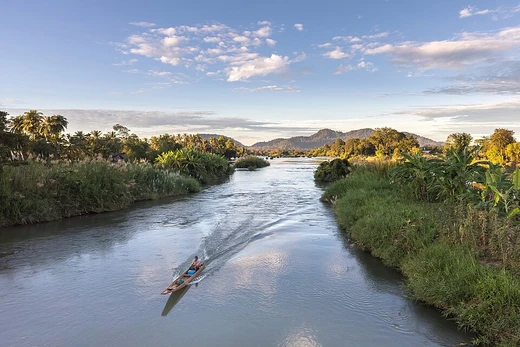
Volga
Europe's longest river, flowing through Russia into the Caspian Sea.

The Volga is the longest river in Europe and the longest endorheic basin river in the world. Situated in Russia, it flows through Central Russia to Southern Russia and into the Caspian Sea. It is widely regarded as the national river of Russia, and the hypothetical old Russian state, the Rus' Khaganate, arose along the Volga around 830 AD. Historically, the river served as an important meeting place of various Eurasian civilizations.
- average_discharge_at_delta
- 8,000–8,500 m³/s (280,000–300,000 ft³/s)
- mouth_elevation
- 28 m (92 ft) below sea level
- drainage_basin
- Closed basin of the Caspian Sea
Lore & Background
It flows east past Lake Sterzh, Tver, Dubna, Rybinsk, Yaroslavl, Nizhny Novgorod, and Kazan, then turns south past Ulyanovsk, Tolyatti, Samara, Saratov, and Volgograd, discharging into the Caspian Sea below Astrakhan. Its major tributaries include the Kama, Oka, Vetluga, and Sura.
Reader's Guide
The Volga is significant as Europe's longest river and the longest endorheic basin river in the world. It drains most of Western Russia, and its many large reservoirs provide irrigation and hydroelectric power. The Moscow Canal, Volga–Don Canal, and Volga–Baltic Waterway connect Moscow to the White Sea, Baltic Sea, Caspian Sea, Sea of Azov, and Black Sea. The fertile valley yields wheat and other agricultural produce, and supports a substantial petroleum industry, as well as natural gas, salt, and potash. The river basin serves as a major invasion corridor for aquatic species, with alien fish species reaching 36–47% of the catch in some reservoirs. High levels of chemical pollution have adversely affected the river and its habitats. The Volga holds deep symbolic meaning in Russian culture, often referred to as 'Volga-Matushka' (Mother Volga) in literature and folklore.
Did You Know?
- The Volga is the longest endorheic basin river in the world.
- The Scythian name for the Volga was Rahā, meaning 'wetness'.
- The Turkic peoples formerly referred to the Volga as Itil or Atil.
- The Volga freezes for most of its length for three months each year.
Frequently Asked Questions
What is the Volga?
The Volga is a major river located entirely within Russia, stretching from Central Russia down to Southern Russia before emptying into the Caspian Sea. It holds the title of Europe's longest river and the world's longest river that drains into an endorheic basin.
Why is the Volga considered Russia's national river?
The river has served as a central artery of trade, culture, and civilization for centuries, and the early Rus' Khaganate (around 830 AD) developed along its banks. It historically functioned as a crossroads where multiple Eurasian cultures met and exchanged goods and ideas.
How much water does the Volga carry?
At its delta, the river discharges an average of roughly 8,000 to 8,500 cubic meters of water per second. That volume makes it one of the most significant freshwater contributors to the Caspian Sea.
More in Rivers 1-16
Spotted an error? Know more?
This is a living reference — every entry is fact-audited, and reader corrections feed straight into our audit queue. Suggest an edit · See this site's audit record